Alright, buckle up, because things are about to get really interesting in the crypto world! We’re seeing headlines everywhere about a "stabilization phase." But let’s be honest, stabilization can sound… well, a little boring, right? Like things are just settling down. But what if it’s not the end of the story, but the beginning of something huge? What if this "stabilization" is actually the foundation for a new era of institutional trust in crypto?
I've been poring over reports from Bitfinex and others, and what jumps out isn't just the reduced debt burden or the capitulation of short-term holders. It’s the way the market is resetting. Think of it like a forest fire – devastating in the short term, but clearing the way for new growth, stronger and more resilient than before. We're seeing realized losses, sure, but as Bitfinex analysts point out, these losses often signal the end of capitulation, not the start of a deeper correction. That is to say, we are nearing the bottom.
And get this: even the traditionally conservative bond funds are starting to dip their toes in Bitcoin ETFs. Texas, of all places, became the first US state to publicly invest in Bitcoin! I mean, Texas! That's not just a headline; it's a statement. It's a sign that Bitcoin is moving from the fringes to the mainstream, even in places you might least expect. This isn't just about the price of Bitcoin going up or down; it’s about the very perception of crypto shifting in the eyes of major players. It's like when the first banks started accepting credit cards – a slow burn at first, but then suddenly, everyone had one.
What does this mean for us? Well, it means that crypto is becoming less of a wild west and more of a regulated marketplace. We’re seeing regulators around the globe, from the US with its GENIUS Act for stablecoins to the EU with MiCA, putting frameworks in place. This isn't just about stifling innovation; it's about creating a safe space for institutions to play ball. And when institutions start to play, things get real.
But let's be clear: this isn't just about making institutions happy. It’s about building a more robust and sustainable crypto ecosystem for everyone. TRM Labs' analysis shows that regulated Virtual Asset Service Providers (VASPs) have significantly lower rates of illicit activity. That’s a win for security, a win for trust, and a win for the long-term viability of crypto. After all, what good is a revolutionary technology if it’s riddled with scams and bad actors?
Now, some might point to the recent Bitcoin price slide, influenced by the Bank of Japan's rate hike expectations, as a sign that the market is still too volatile. And sure, volatility is part of the game. But look closer: even during that dip, open interest was up! That tells me that fresh positions are entering the market, that traders are seeing opportunity, not just risk. Crypto Market Update: Bitcoin Price Slide Continues Despite Rising Open Interest
Farzam Ehsani, CEO of VALR, mentioned the potential exclusion of major crypto-holding companies from global indices as a source of pressure. But here's the thing: even if that happens, Ehsani notes that major institutional players might see it as a buying opportunity. It's like Warren Buffett saying, "Be fearful when others are greedy, and greedy when others are fearful." Crypto Market Update: Strategy Faces MSCI Index Removal, SEC Freezes Ultra-Leveraged ETF Approvals
Look, I know it's tempting to get caught up in the day-to-day price swings. But what’s really exciting about all this is the potential for crypto to become a truly mainstream asset class. Imagine a world where you can seamlessly transfer value across borders, where financial services are accessible to everyone, where decentralized applications are revolutionizing industries from healthcare to supply chain management. That's the promise of crypto, and it's a promise that's getting closer to reality every day.
And speaking of revolutionizing industries, here is a glimpse of what the community thinks about this movement. > I am so bullish in crypto that I refuse to take profit. The future is now. > - Reddit User u/ SatoshiNakamotoForever
Of course, with great power comes great responsibility. As we move towards this new era of institutional trust, we need to be mindful of the ethical implications. We need to ensure that regulation doesn't stifle innovation, that access remains open to everyone, and that the benefits of crypto are shared equitably.
This stabilization phase isn't just about things calming down; it's about the pieces falling into place. It's about building a foundation of trust, security, and regulatory clarity that will unlock the full potential of crypto. It's about institutions stepping up, not to dominate the space, but to help it mature. It's about a future where crypto is not just a speculative asset, but a fundamental part of the global financial system. And honestly? When I look at all the progress that's been made, I can't help but feel incredibly optimistic about what's to come.

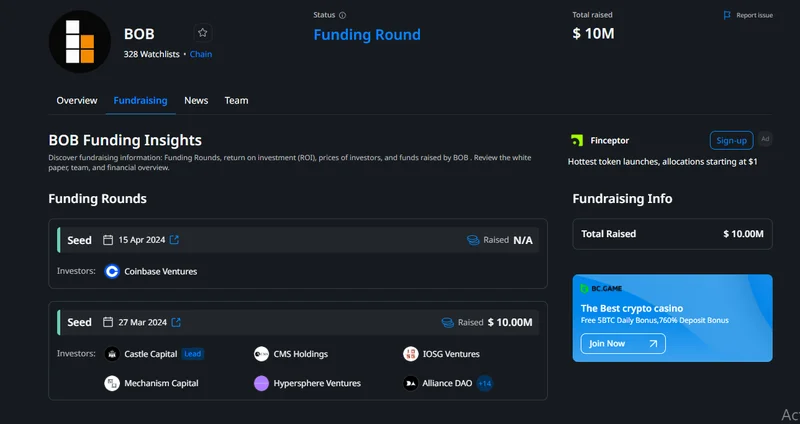
BOB: Bitcoin DeFi's Latest Gambit
2025-11-21